Compliance is becoming the trigger for smarter tax transformation
At the recent Future of Compliance in the Age of AI seminar hosted by Thomson Reuters and EY in Singapore, corporate tax, legal, trade compliance and consulting leaders gathered to discuss how AI-enabled compliance technology is shifting from a cost centre to a growth driver. The roundtable was led by Zoe Martinez, AI & Global Trade Lead at Thomson Reuters, and Agnes Fok, Partner, Tax Technology & Transformation at EY Singapore.
The conversation reflected a wider market shift. The 2026 Corporate Tax Department Technology Report, produced by Thomson Reuters Institute in partnership with Tax Executives Institute, found that two-thirds of corporate tax departments say technology investment over the past three years has helped them move towards more strategic, proactive work. At the same time, 64% still describe themselves as chaotic or reactive on the technology maturity curve. Many teams remain stuck with fragmented processes and manual work.
For organisations across Southeast Asia, the tension is urgent.
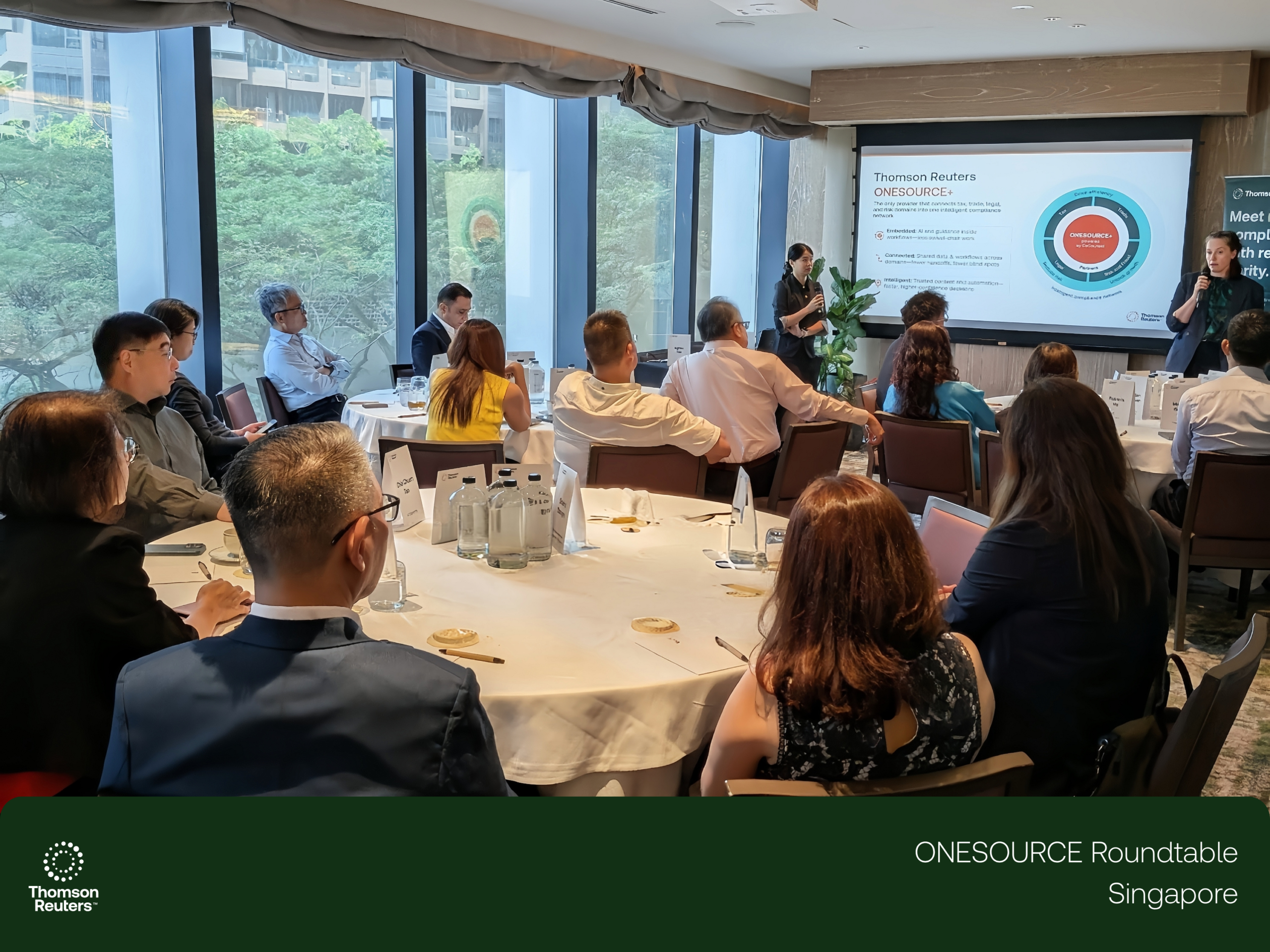
Mandates are forcing action
Regulatory mandates are now one of the clearest drivers of tax technology investment. From e-invoicing and Pillar Two to GST reporting and IFRS 18, today’s rules are pushing companies to fix long-standing weaknesses in their data and systems that they have lived with for years.
One roundtable participant shared how a manufacturer with 11 ERP systems used e-invoicing requirements as the trigger to harmonise tax data across the business: a compliance project that turned into a broader data transformation programme.
Pillar Two creates similar pressure. The reporting complexity and group-level risk exposure of global minimum tax rules are pushing companies beyond Excel. Manual workflows are familiar, but harder to defend when tax authorities and boards expect more accuracy and control over the numbers.
Statutory reporting and IFRS 18 raise the same problem. As disclosure expectations evolve, finance and tax teams need consistency in how data moves from the ledger to disclosure across jurisdictions. Fragmented systems make it harder to reconcile reliable statutory accounts and answer regulator or auditor questions with confidence.
Singapore’s GST InvoiceNow requirement is the most immediate catalyst. IRAS has confirmed phased implementation, beginning with new voluntary GST registrants from 1 April 2026, with existing GST-registered businesses brought into scope progressively through to 1 April 2031.
For businesses, the implication is simple. Tax determination has to be right at the source. Once invoice data flows through digital channels, errors cannot be tidied up at the filing stage. A wrong tax code, or incomplete master data forces credit notes, reissuance and remediation downstream. Every fix adds cost, effort, and audit exposure.

Data remains the foundation
The roundtable highlights a consistent theme that AI and automation can only be as effective as the data beneath them.
Many companies still operate with inconsistent data across multiple ERP systems, often the legacy of M&A, regional autonomy, or older architecture. If tax codes are wrong in the ERP, downstream automation will not fix the problem. It will accelerate it.
This is why compliance data should be treated as a strategic asset. Clean, harmonised data enables reliable tax determination, and stronger reconciliation. It also creates the conditions for AI to deliver value safely.
AI should augment, not replace
The near-term opportunity for AI in tax and compliance is augmentation, not full replacement.
Thomson Reuters’ 2026 AI in Professional Services Report found that AI adoption has reached critical mass across legal, tax, accounting, risk, fraud, and government sectors. 66% of professionals who support using generative AI in their daily work are optimistic about its future.
For tax and finance teams, practical AI use cases include data cleansing, transaction-level tax code classification, anomaly detection, reconciliation, and draft return preparation. These are high-volume activities where AI reduces manual effort and lets teams focus on judgment and strategy.
But governance remains important. The question for tax leaders is not only “Can AI produce an answer?” but “How do we know if the answer is right?” Human oversight, validation, and audit trails have to be built into any AI-enabled compliance process.
The Thomson Reuters tax technology report also found that AI timelines have accelerated. Tax professionals now expect AI to become central to workflows within one to two years, compared with three to five years just a year earlier. The implication? Start with lower-risk, high-volume pilots now, before more complex use cases become unavoidable.
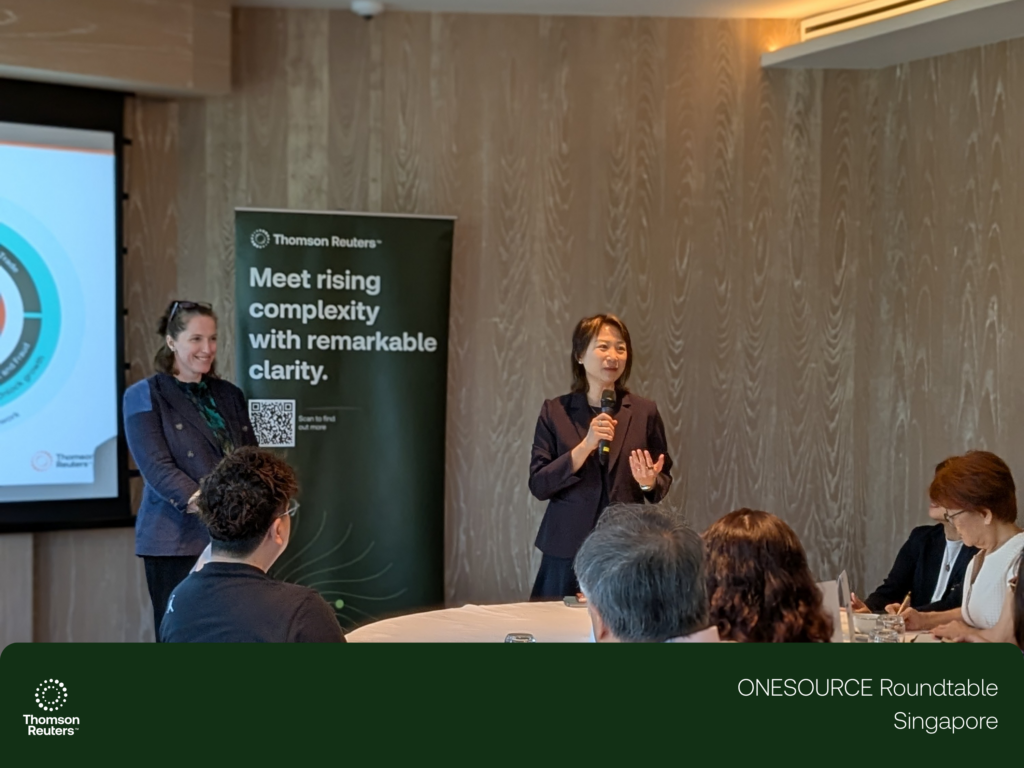
From compliance cost to strategic value
To address the challenges faced by tax professionals, ONESOURCE+ compliance platform brings tax, trade, legal, and risk obligations onto a single foundation of trusted content and AI capabilities. It breaks the silos that most organisations operate with today
For e-invoicing specifically, ONESOURCE Pagero connects suppliers, customers and government authorities in more than 80 countries through a single ERP connection. ONESOURCE E-Invoicing combines ONESOURCE Indirect Compliance for automated GST and VAT reporting with Pagero’s e-invoicing capabilities, covering both local and international e-invoicing requirements for businesses.
For global minimum tax and statutory reporting, Orbitax Global Minimum Tax helps tax teams manage Pillar Two data collection, calculation, and reporting. ONESOURCE Tax Provision supports the calculation of current and deferred tax, helping teams move from trial balance to tax provision with greater speed and accuracy. ONESOURCE Statutory Reporting, on the other hand, supports the preparation of local statutory accounts across jurisdictions.
Together, these solutions help tax and finance teams shift to consistent, governed data that supports both local compliance and global reporting needs. Whereas regulatory mandates are the business case. The teams can use them to modernise data, strengthen controls and connect compliance work that has historically been run in silos.
The organisations that move first will spend less on remediation and free their teams for higher-value work: tax planning, M&A support, and strategic advisory.

What’s Next? Want to know more about how to get ahead in AI-powered tax compliance? Join us at the upcoming Synergy Singapore on 16 July. Register your interest today.